FO Research / Fiscal
Fiscal.
Fiscal policy and Treasury supply: deficits, issuance and buybacks. See the Treasury buybacks explainer on Learn.
9 reports filed under Fiscal
 The Issuer Offered Six. The Market Sold It.
The first enlarged buyback was disappointing before it ran. Treasury capped Thursday's ten to twenty year operation at $6bn, above the $4bn floor it had guided and below the $10bn some had come to expect, and the curve sold the number into a $100 barrel: the ten-year to its highest in nearly three years, the thirty-year into the upper half of the range the desk redrew in August, the two-year backing up toward the Fed's own week. On Thursday the desk got both hands on one tape, a $22bn thirty-year auction at 18:00 London and the operation itself an hour later. The read was written down before the prints and is scored on the settles below.
 Treasury Buybacks and the Issuer's Hand
 The Chair Speaks. The Pen Stays.
The chair's first Jackson Hole address names the two conditions the desk registered as its risk branch: inflation progress he cannot call meaningfully improved, financial conditions he is hard pressed to call restrictive. The front end reprices September from roughly a third to a coin flip. The thirty-year moves one and a half basis points. Five tests were published before the events; the desk scores them here, the miss first.
 Three Hands. One Pen.
On Friday morning the new Fed chair gives his first Jackson Hole address, and at the same hour the statisticians publish the preliminary payrolls benchmark revision, an exercise whose previous preliminary estimate subtracted 911,000 jobs. Between now and then: the Fed's preferred inflation gauge, a Bank of Korea decision that could deliver the global tightening cycle's newest hike, and a Treasury reported, twice in one Monday session, to be willing to do whatever it takes to defend its own long end. Three hands now reach for the same pen: a committee that declines to write, a market that has been writing all month, and an issuer that wants to steady the hand. The desk's practice before weeks like this is to publish its tests first and score them after. Here are the tests.
 Ten Dollars Offered. One Accepted.
On Wednesday the US Treasury said it will at least double its buyback operations in the two longest nominal sectors, citing consistent strong sponsorship rather than strain. The verdict took four minutes: the dollar fell, global bonds rallied and gold rose a per cent. Then the twenty-year auction tailed anyway. The operation is worth basis points and the announcement is worth more, because all year the market has offered this door around ten dollars of long bonds for every one accepted, and Tuesday, the quietest such day of 2026, was no exception. The issuer widened the exit the morning after the shortest queue of the year, in a week that had already carried thirty-year yields to their highest since 2007.
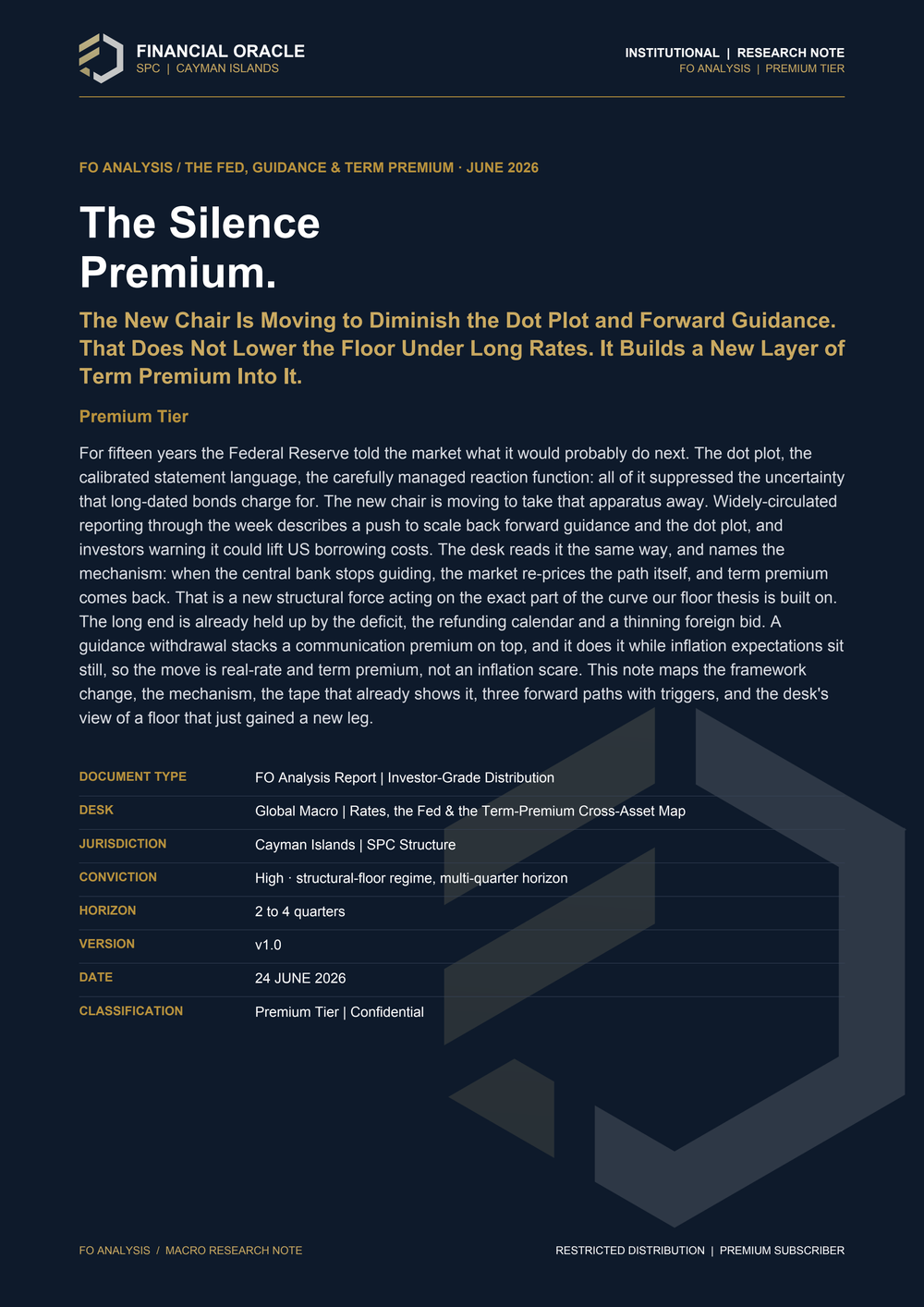 FO Analysis: The Silence Premium.
The shorthand: forward guidance was a term-premium suppressant, and the new chair is removing it. The 30-year sits near 4.94%, the front end anchored near 4.21%, the curve steep at +70bp, and the 10-year breakeven still near 2.21%. Firm long yields with flat breakevens is a premium story, not an inflation one. The floor under long rates does not fall when the Fed goes quiet. It gains a new leg. Same floor, higher premium.
 FO Analysis: The Buyers Go Home.
The shorthand: a credible ceasefire framework arrived and the 30-year held 4.97%, higher on the week, not lower. The Bank of Japan lifted its policy rate to 1.00%, a 31-year high, and cut its bond buying. Credit compressed (HY OAS 2.71) rather than widened, so this is not a fear trade. USD/JPY barely moved at 160, so the carry unwind is a slow burn, not yet a shock. The war premium leaving could not lift the long end off the floor, because the floor is the vanishing buyer, not the conflict. Warsh meets that floor tomorrow.
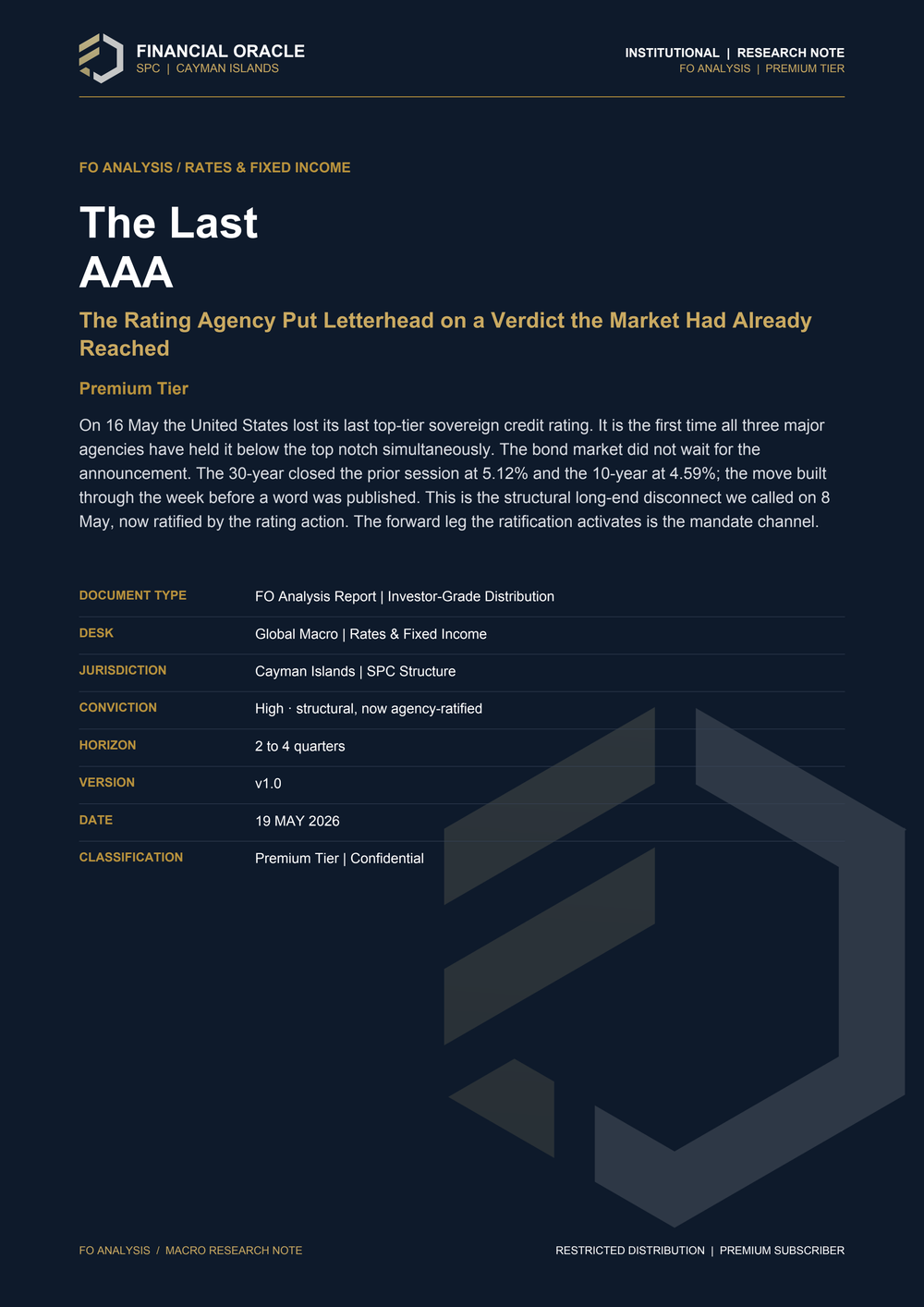 FO Analysis: The Last AAA
We called the structural long-end disconnect on 8 May. The rating action is the institutional ratification of that thesis, not a new one. The forward leg it activates, the part the consensus is not pricing, is the mandate channel: the marginal, price-insensitive, mandate-constrained buyer of size now has a technical reason to step back, independent of view.
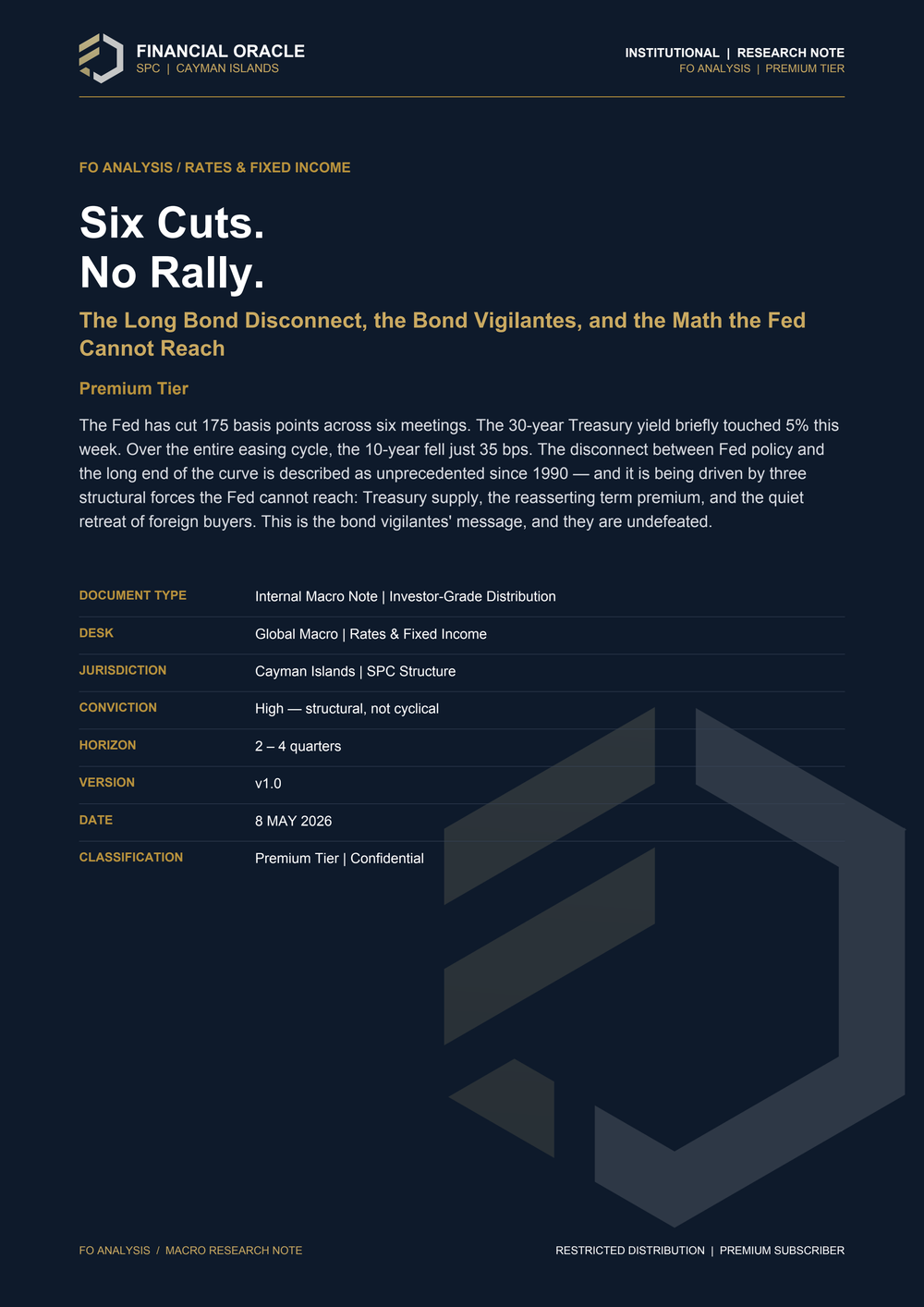 The Long Bond Disconnect
The bond vigilantes are not pricing Fed policy, they are pricing fiscal arithmetic. The Fed controls the price of money overnight. It does not control what a Gulf sovereign reserve fund or a Canadian pension pool demands to lend the U.S. government money for thirty years. Right now, they are demanding more.