FO Research / Bonds
Bonds
research.
All FO Research reports filed under Bonds.
15 reports filed under Bonds
 What Is a Credit Spread? HY OAS Explained
 Twelve to Nothing. The Curve Went Further.
The committee raised rates on 16 September without a single dissent, deleted the energy language from its statement and put one more rise in the dots. The desk registered four tests on that decision and pre-committed in print to scoring them on the following Thursday's settle. It did not. This note scores them seven sessions late, says so in the first row of its own table, and then scores a level and a claim the desk had to defend and did not hold: a thirty-year range that broke on 24 September and has widened since, and a buyback queue the desk is retiring rather than arguing with. What survived is the mechanism, and it is the part worth reading. Measured from the close before the August inflation print, the ten-year is twenty-nine basis points higher and the market's own inflation forecast is six lower. The whole move is real, and then some.
 The Issuer Offered Six. The Market Sold It.
The first enlarged buyback was disappointing before it ran. Treasury capped Thursday's ten to twenty year operation at $6bn, above the $4bn floor it had guided and below the $10bn some had come to expect, and the curve sold the number into a $100 barrel: the ten-year to its highest in nearly three years, the thirty-year into the upper half of the range the desk redrew in August, the two-year backing up toward the Fed's own week. On Thursday the desk got both hands on one tape, a $22bn thirty-year auction at 18:00 London and the operation itself an hour later. The read was written down before the prints and is scored on the settles below.
 Bear Steepener vs Bull Flattener: Curve Moves Explained
 Treasury Buybacks and the Issuer's Hand
 Ten Dollars Offered. One Accepted.
On Wednesday the US Treasury said it will at least double its buyback operations in the two longest nominal sectors, citing consistent strong sponsorship rather than strain. The verdict took four minutes: the dollar fell, global bonds rallied and gold rose a per cent. Then the twenty-year auction tailed anyway. The operation is worth basis points and the announcement is worth more, because all year the market has offered this door around ten dollars of long bonds for every one accepted, and Tuesday, the quietest such day of 2026, was no exception. The issuer widened the exit the morning after the shortest queue of the year, in a week that had already carried thirty-year yields to their highest since 2007.
 Reading the Yield Curve: Inversion, Un-Inversion and the Timing Trap
 Term Premium, Explained: Why Long Yields Rise as the Fed Cuts
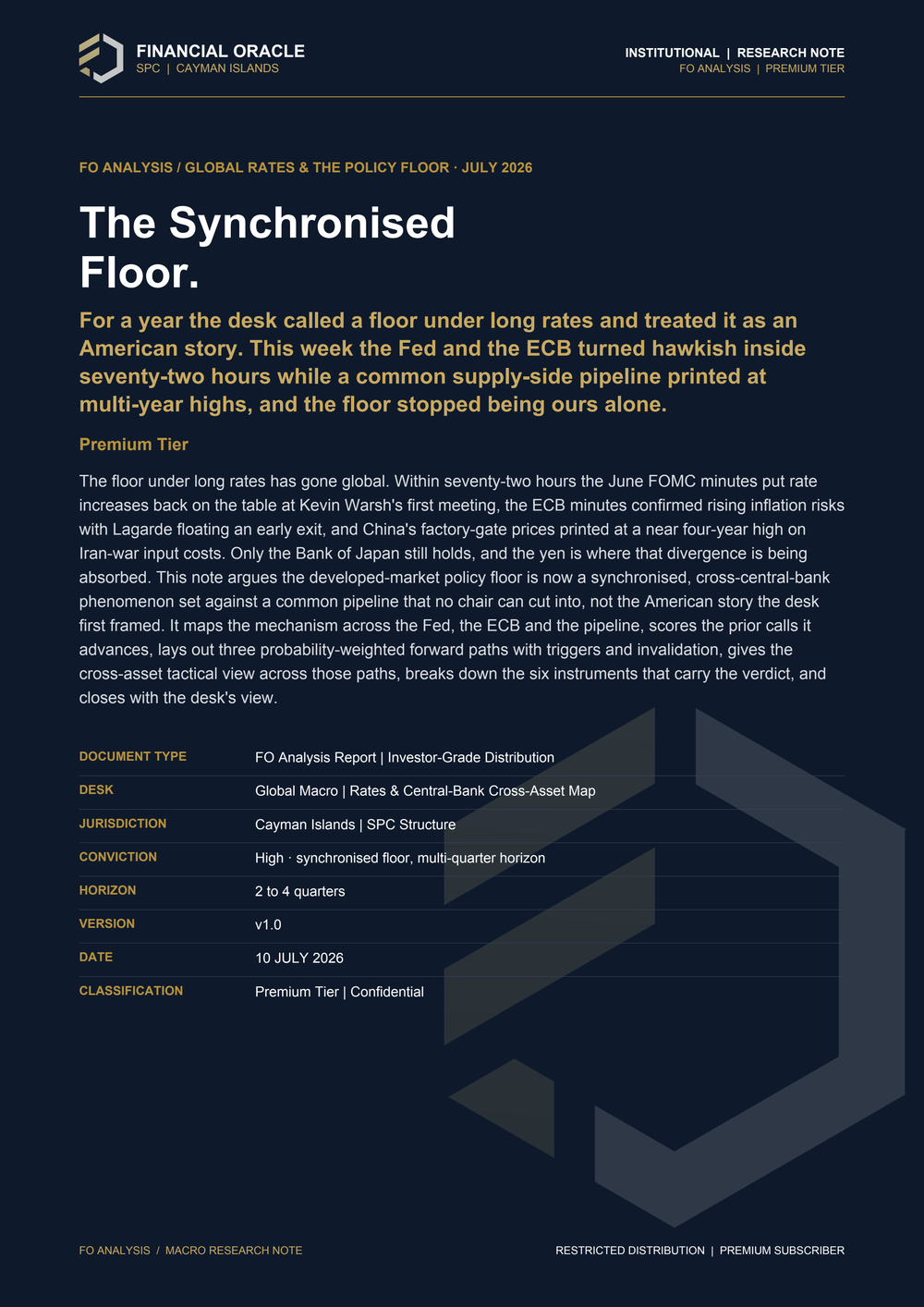 FO Analysis: The Synchronised Floor.
The shorthand: the long end holds its band while the Fed and the ECB turn hawkish in the same week and the pipeline stays firm beneath them, and only the Bank of Japan still holds. The floor under long rates is no longer a US idiosyncrasy. It is a synchronised, cross-central-bank regime, and the yen is where the one holdout's divergence is being paid.
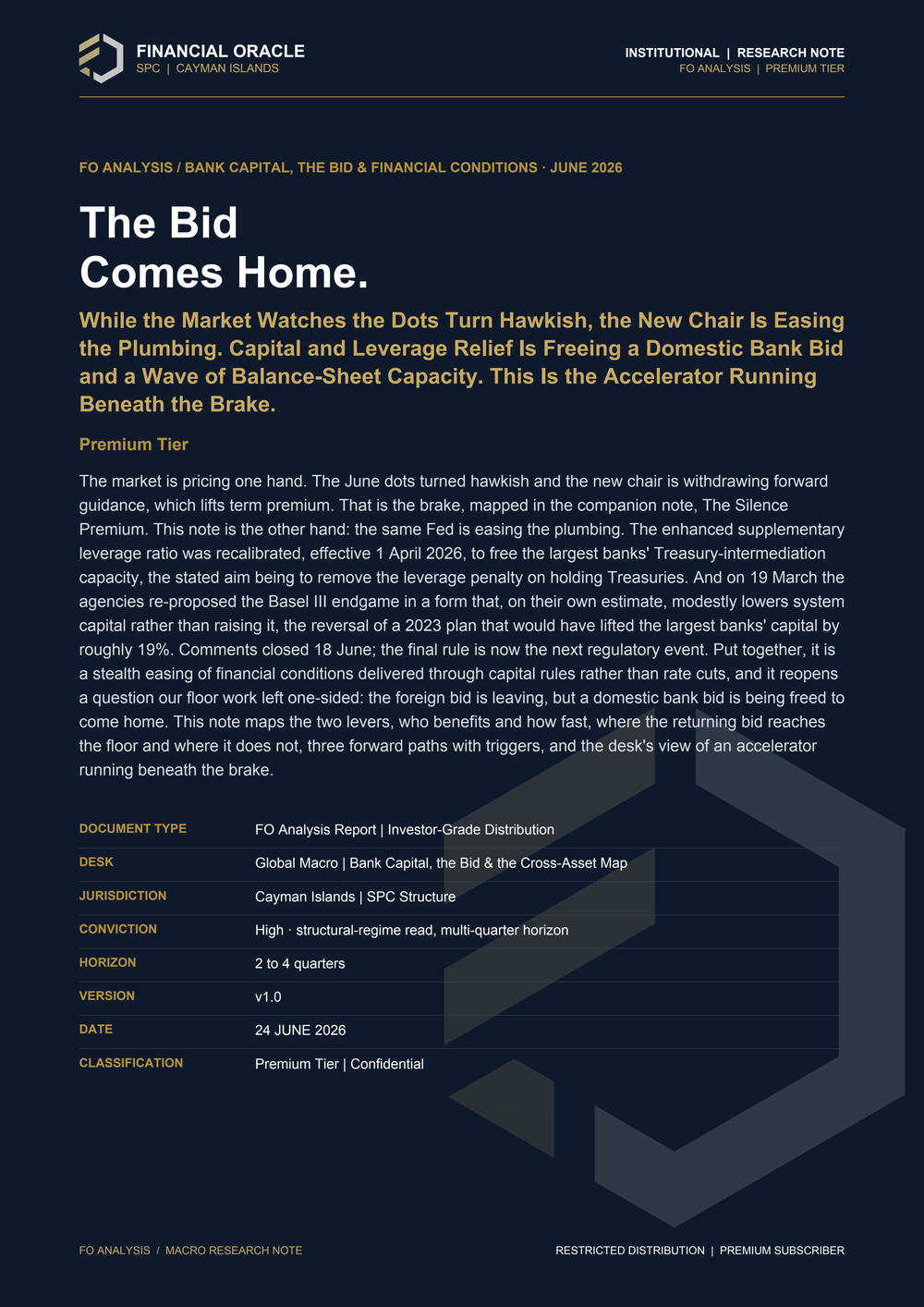 FO Analysis: The Bid Comes Home.
The shorthand: the Fed is running the brake and the accelerator at once. The brake is the rate hand, hawkish dots and a guidance withdrawal that lifts term premium. The accelerator is the capital hand, a leverage relief already in force and a Basel re-proposal that cuts rather than raises capital, freeing a domestic bank bid and a wave of balance-sheet capacity. Banks are rising into higher rates because equity already prices it. The honest limit: the returning bid skews short, so it eases the front end, the plumbing and credit more than the 30-year. The floor still needs term premium to turn. Same floor, new cross-current.
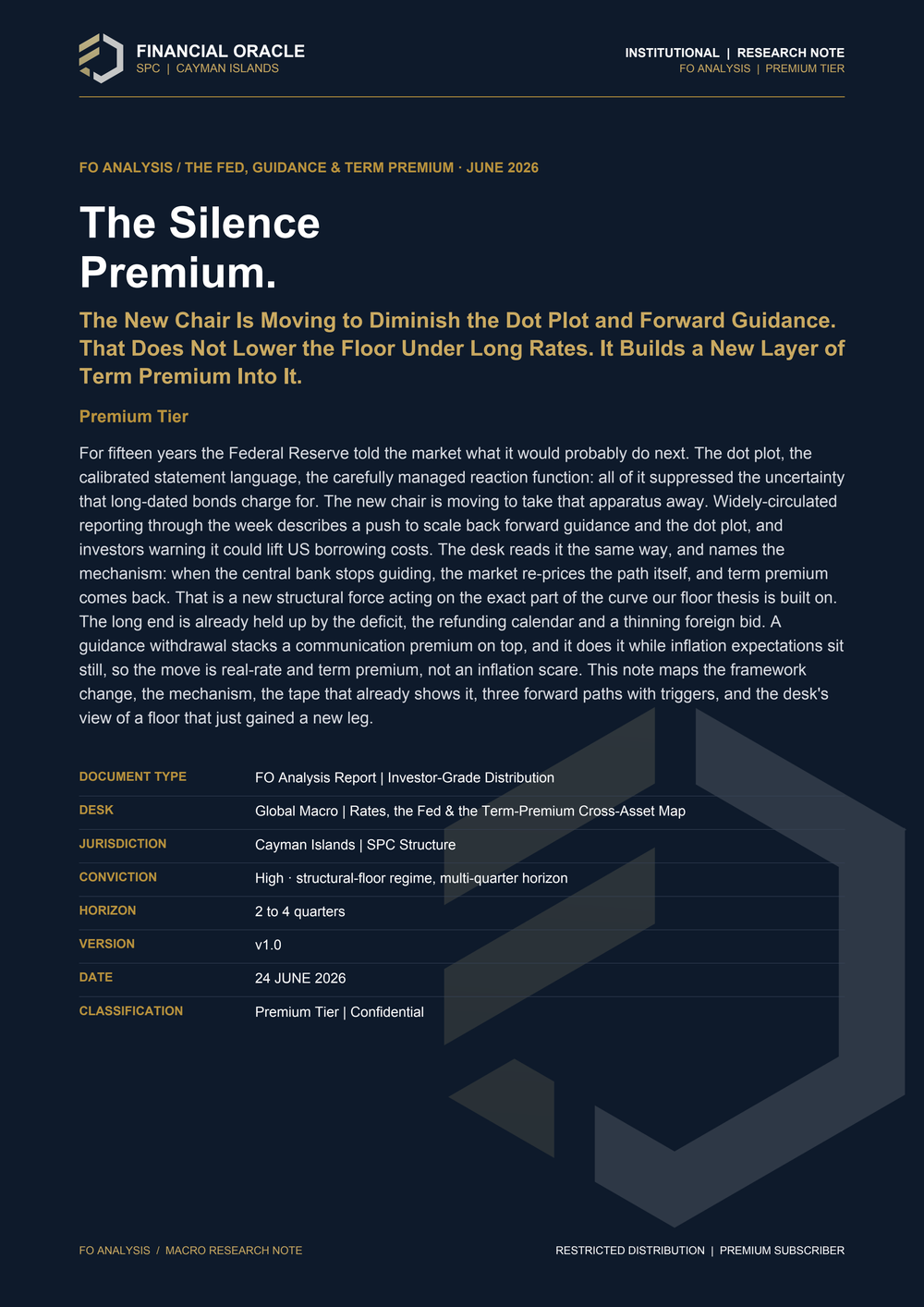 FO Analysis: The Silence Premium.
The shorthand: forward guidance was a term-premium suppressant, and the new chair is removing it. The 30-year sits near 4.94%, the front end anchored near 4.21%, the curve steep at +70bp, and the 10-year breakeven still near 2.21%. Firm long yields with flat breakevens is a premium story, not an inflation one. The floor under long rates does not fall when the Fed goes quiet. It gains a new leg. Same floor, higher premium.
 The War Is Over. The Floor Isn't.
The Iran ceasefire is signed and Brent has fallen into the high 70s, yet the 30-year has not followed it down. The financial press is now asking why. The desk answered it before the question was asked: the floor under the long end was never the war. It is the bid, and this week the bid got thinner while the deficit got heavier.